


Welcome to the Outperform blog page - your ultimate destination for discovering the secrets to unlocking your full potential in the realm of tactical professions. Whether you're striving to achieve your dream career or looking to elevate your fitness for better job performance, we've got you covered.
⚠️Currently undergoing maintenance. Some links may not work correctly
Article Topics:
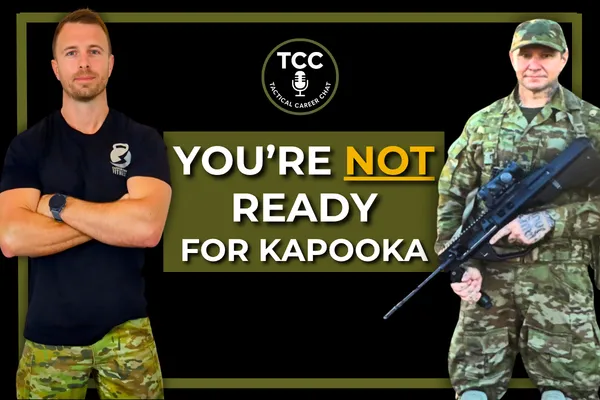
Joining the Australian Army at 40: Kapooka Preparation, Fitness & Beep Test Training
Joining the Army at 40: What Kapooka Is Really Like and How to Prepare Properly
If you’re preparing to join the Australian Army, it’s easy to focus on just passing the fitness test. But as this Tactical Career Chat shows, that’s not what Kapooka actually demands. There’s a big difference between scraping through the entry standard and being physically and mentally ready for what’s coming.
In this chat, I sat down with Cam, who enlisted into the Army Reserves infantry at 40 and has just come back from Kapooka. His experience highlights the reality of the process, from struggling with running early on through to handling the pressure of training. If you’re serious about joining, there’s a lot you can take from this.
The Decision to Join the Army Later in Life
For Cam, joining the Army wasn’t something he decided on overnight. It was something he’d wanted to do since he was young, but he was held back for years due to tattoo restrictions. He’d had tattoos on his hands for over 20 years, which made him ineligible at the time. Once the policy changed to a case-by-case basis, he didn’t hesitate and went straight into the application process.
That’s an important takeaway. A lot of people sit on the idea of joining and wait for the perfect time, but when the opportunity actually presents itself, you need to act on it.
ADF Enlistment Timeline: Expect Delays
One thing that stood out from his journey was how long the process can take and how unpredictable it can be. From his initial application through to enlistment, things moved forward roughly every month, but getting into Kapooka wasn’t immediate. He missed one intake, then had to wait again before finally getting his spot.
That waiting period is where a lot of people lose momentum. Cam mentioned that after missing one intake, he became a bit disheartened and slacked off for a month before having to reset and get back into training. If you’re in that phase now, this is where discipline matters most. You need to stay ready so that when the call comes, you’re not starting from scratch again.
ADF Fitness Preparation: Where Most People Get It Wrong
Cam’s biggest weakness wasn’t strength, it was running. This is something I see all the time with applicants. He hadn’t done much running since school and it showed straight away.
He couldn’t run for five minutes without wanting to stop, and his first beep test score was 4.5.
“I can’t even run for five minutes without wanting to just pack it in.”
That’s a pretty common starting point, especially for people who have spent most of their time lifting weights in the gym. The issue is that gym training alone doesn’t prepare you for the demands of the ADF. Running is a separate skill and it needs to be built properly over time.
If that’s something you’re struggling with, this is exactly where you should start:
https://info.outperformfitness.com.au/beeptest
From Low Fitness to Kapooka Ready
Over time, with structured training, his fitness improved across the board. His beep test doubled, his push-ups improved significantly, and his sit-ups were maxed out. More importantly, it all transferred directly into Kapooka.
He didn’t struggle physically once he got there.
“I didn’t gas out once down at Kapooka. I had no issues whatsoever with physical fitness.”
That’s the goal. You don’t want to be just getting through sessions hoping you’ll keep up. You want to be in a position where the physical side is handled so you can focus on everything else that’s being thrown at you.
Why Structured Training Matters
Another big point he touched on was the importance of having structure in your training. It’s easy to think that just working hard is enough, but without a plan, people tend to either do too much or not enough in the areas that actually matter.
Without structure, you’ll often see things like:
Doubling up on sessions without purpose
Burning yourself out
Avoiding weaker areas like running
With structured training, everything has a purpose and builds over time. You can track your progress, see where you’ve improved, and hold yourself accountable.
“You don’t really realise until you do it yourself how effective the training is.”
Preparing Mentally for Kapooka
One of the more interesting parts of his preparation was how he trained mentally as well as physically. He didn’t just do his sessions and leave it at that. He started adding stress into his training to simulate what it would feel like under pressure.
For example, after hard interval runs, he would force himself to recite the phonetic alphabet while completely gassed. He also used breathing techniques to manage stress, which he later found being taught at Kapooka as well.
These small things make a difference because at Kapooka, you’re not just tired physically. You’re expected to think, learn, and perform while under fatigue, and that’s what catches a lot of people out.
What Kapooka Is Really Like
A big theme throughout the chat was that no matter how much content you watch or how much you try to prepare mentally, you won’t fully understand Kapooka until you’re there.
“No matter how many of these videos you watch… you don’t get it.”
The first day hits hard and things escalate quickly. There’s constant pressure, constant movement, and a lot of information being thrown at you all at once. It’s not just physically demanding, it’s the mental load that makes it challenging.
The Hardest Part: Week 2
For him, week two was the toughest part of the entire experience. This is where the pressure really built up with back-to-back lessons, weapons testing, and medical training all happening at once.
At one point, he was seriously questioning why he was there.
“What am I doing here?”
That moment is more common than people think. The key difference is how you respond to it. Some people shut down, others push through it.
Overcoming Challenges and Pushing Through
What got him through that period wasn’t just individual effort, it was the people around him. The guys in his room helped him practise, corrected mistakes, and kept him on track when things started to slip.
Another big shift was moving away from the fear of failing. Early on, he was putting a lot of pressure on himself to get everything perfect, which actually made things worse. Once he started focusing on just executing each task properly instead of worrying about the outcome, things began to click.
The Importance of Teamwork at Kapooka
One of the biggest standouts from his experience was the level of camaraderie. It shows up in the small things that you wouldn’t expect.
Helping each other get dressed under time pressure
Fixing each other’s gear before inspections
Sharing food and looking after each other
Making sure no one falls behind
“I’ve never seen people share like what we did… even the smallest biscuits were getting broken into four.”
You quickly realise that it’s not an individual environment. You succeed as a team.
Age vs Performance in the Army
Going through Kapooka at 40 didn’t hold him back. In fact, he saw people even older performing at a high level, in some cases outperforming younger recruits.
The difference came down to discipline, work ethic, and life experience. Being older isn’t a disadvantage if you prepare properly and bring the right mindset into it.
Key Lessons for ADF Applicants
If you take anything from this, it should be this:
Don’t train just to pass the fitness test
Running needs to be a priority
Expect delays and stay consistent
Prepare mentally, not just physically
You will be pushed outside your comfort zone
Final Advice Before Kapooka
You’re not going to feel fully ready, and that’s normal. The key is to focus on what’s in front of you rather than trying to think too far ahead.
Take it one task at a time, one hour at a time, and one day at a time. That approach made a big difference once he got into the environment and stopped trying to control everything in advance.
Get Prepared Properly
If you’re serious about joining the ADF, don’t just aim to scrape through the fitness test. Build the fitness and confidence to actually handle Kapooka.
Start with your running and beep test here:
https://info.outperformfitness.com.au/beeptest
And if you want a structured plan that covers everything you need to be ready:
https://info.outperformfitness.com.au/getbattleready
FAQ
What fitness level do you need for Kapooka?
You need to be well above the minimum standard so you can handle both the physical load and the mental pressure of training.
How hard is Kapooka really?
Physically manageable if you prepare properly, but the mental pressure and constant learning are what challenge most people.
How long does it take to join the Australian Army?
It can take around 12 months or more depending on timelines, availability, and delays.
What is a good beep test score for the ADF?
Higher than the minimum. The better your score, the easier you’ll handle training.
Can you join the Army at 40?
Yes. As shown here, age isn’t a barrier if you prepare properly.

WANT TO GET
BATTLE READY?
Specialised online fit-prep program for ADF & First Responder applicants
Copyright Outperform Fitness © 2023.